
Stoke Canon C of E Primary School
Maths Curriculum
Mathematics Curriculum at Stoke Canon C of E Primary School
Stoke Canon Maths Statement: Stoke Canon aims to provide children with the deepest learning possible, embedding the use of multiple representations for all, developing connections across all areas of mathematics, enabling learners to justify, reason, problem solve and apply their knowledge to a variety of mathematical situations.
The Curriculum at Stoke Canon C of E Primary School
The national curriculum for mathematics intends to ensure that all pupils:
- become fluent in the fundamentals of mathematics, including through varied and frequent practice with increasingly complex problems over time, so that pupils develop conceptual understanding and the ability to recall and apply knowledge rapidly and accurately .
- reason mathematically by following a line of enquiry, conjecturing relationships and generalisations, and developing an argument, justification or proof using mathematical language
- can solve problems by applying their mathematics to a variety of routine and non-routine problems with increasing sophistication, including breaking down problems into a series of simpler steps and persevering in seeking solutions.
The Maths Curriculum is delivered using the National Curriculum guidance 2014, and the Foundation Stage is followed to ensure continuity and progression.
At Stoke Canon, maths is taught in four strands: Data Handling, Shape Space and Measure, Number and Using and Applying.
Links to the Stoke Canon Calculation Policy, the Primary National Curriculum and the White Rose Annual Overviews can be found below.
The Intent, implementation and Impact of our Mathematics Curriculum
A Mathematician from the Three Rivers Federation will:
- be passionate about mathematics and enjoy using it
- have spatial sense and the ability to appreciate patterns and structures of number and shapes in the world around them
- be courageous and happy to make mistakes in order to learn from them
- be confident and proud of their work in mathematics
- have the ability to think, communicate, and solve problems
- be prepared and confident enough to support others to understand the mathematical skills needed in life.
Historically, mathematics has been taught by memorising key facts and procedures, which tends to lead to a superficial understanding that can easily be forgotten. At Stoke Canon, we believe that children should be given the opportunity to gain a deeper understanding of mathematical concepts, enabling them to become autonomous in their learning and use and apply mathematical concepts across a broad and varied range of situations.
It is our belief that every child can achieve in mathematics and we want to eradicate a commonly held misconception that some pupils can 'do' maths and others cannot. A typical Maths lesson will provide the opportunity for all children, regardless of their ability or age, to work through Fluency, Reasoning AND Problem Solving activities.
Intent
Maths is a journey from which many start at different places. At Stoke Canon, our intention is that children foster a love of mathematical learning, whatever their ability or starting place and that they able to confidently use and apply mathematical concepts across a variety of situations. We expect children to clearly articulate their ideas and thoughts and reasoning processes, enabling deeper learning. We expect children to make mistakes, analyse them and learn from them, justifying and explaining as they do this. At each stage of learning, children should be able to demonstrate a deep, conceptual understanding of the topic and be able to build on this over time.
There are 3 levels of learning:
- Shallow learning: surface, temporary, often lost
- Deep learning: it sticks, can be recalled and used
- Deepest learning: can be transferred and applied across a variety of different contexts
The deep and deepest levels are what we are aiming for by teaching maths using the Mastery approach.
We aim to provide all pupils with some direct teaching every day, which is oral, interactive and stimulating. Teaching styles and lesson structure provide opportunities for pupils to consolidate their previous learning, use and apply their knowledge, understanding and skills, pose and ask questions, investigate mathematical ideas, reflect on their own learning and make links with other work.
Implementation
Multiple representations for all!
Concrete, pictorial, abstract
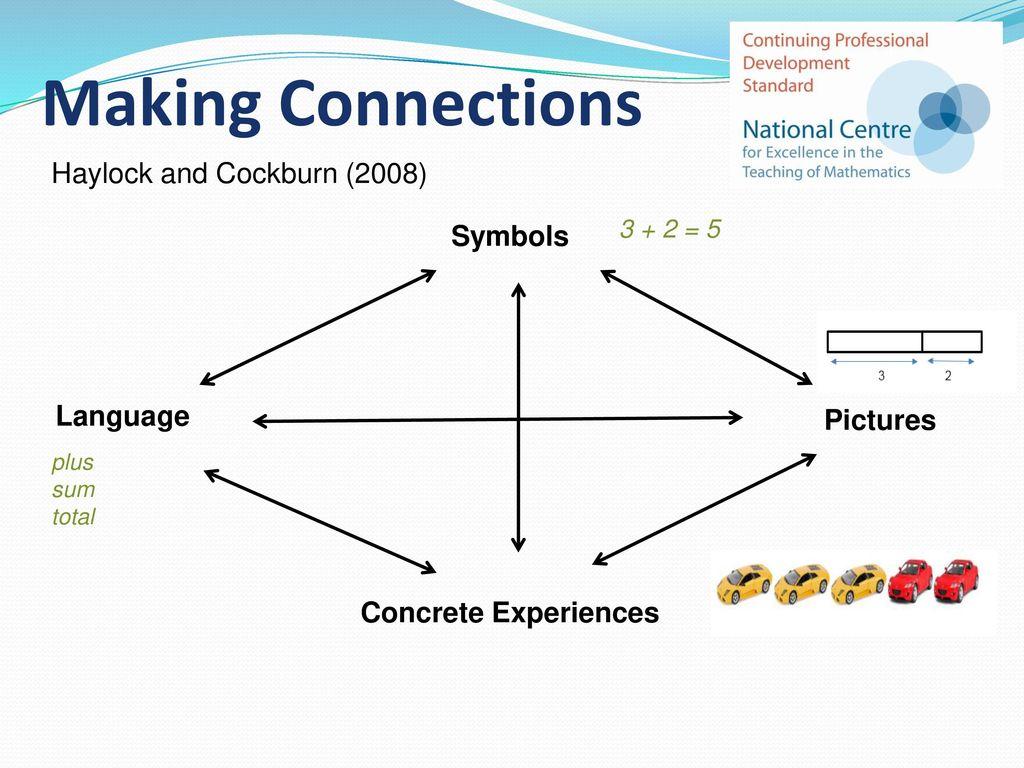
Objects, pictures, words, numbers and symbols are everywhere. The mastery approach incorporates all of these to help children explore and demonstrate mathematical ideas, enrich their learning experience and deepen understanding. Together, these elements help cement knowledge so pupils truly understand what they’ve learnt and can apply them to other, unfamiliar mathematical situations.
All pupils, when introduced to a key new concept, should have the opportunity to build competency in this topic by taking this approach. Pupils are encouraged to physically represent mathematical concepts and problems, explaining their reasoning as they do this. Objects and pictures are used to demonstrate and visualise abstract ideas, alongside numbers, language and symbols.
Concrete – children have the opportunity to use concrete objects and manipulatives to help them understand and explain what they are doing.
Pictorial – children then build on this concrete approach by using pictorial representations, which can then be used to reason and solve problems.
Abstract – With the foundations firmly laid, children can move to an abstract approach using numbers and key concepts with confidence.
To ensure our aims are met, we base our teaching on the following key principles:
a dedicated mathematics’ lessons every day;
- direct teaching and interactive oral work;
- daily opportunities to explain reasoning and justify answers;
- an emphasis on mental calculation;
- activities differentiated in a manageable way so that all pupils are engaged in mathematics related to a common theme
- Opportunities for investigation
The Classrooms are stimulating learning environments. Displays contain a mixture of:
- problems to stimulate imagination;
- prompts to help pupils develop an image of number and the number system (for example number squares and number lines) and to help them remember key facts and vocabulary;
- pupils’ work which celebrates achievement.
Children are assessed in a variety of ways:
- short, informal assessment tasks focusing on rapid recall of mental calculation skills
- homework and other informal assessment tasks (which are often followed immediately by marking and discussion with the whole class).
Assessment Informing Planning
Assessment activities are planned which involve a range of ideas and skills linked to one or more of the key objectives covered previously. As a result of these assessments,teachers are able to accurately pinpoint gaps in children's knowledge and understanding and are able to plan lessons which address these gaps.
Long-term assessments are undertaken through a combination of teacher assessment and end of year summative assessment tasks. These are then used to inform parents of their child's progress and are the passed onto the next teacher to inform future planning. Each teacher has time allocated to discuss each pupil’s attainment and progress with their existing teacher at the end of the term before pupils move class.
Continuity and progression
The yearly teaching objectives and the termly planning sheets from the White Rose Framework are used consistently by all teachers to ensure continuity and progression across the school. Teachers also use the supplement of examples in the Framework to ensure that planned activities, irrespective of the age and ability, are pitched at the right level.
Impact
- Learners who can clearly explain their reasoning and justify their thought processes
- Quick recall of facts and procedures
- The flexibility and fluidity to move between different contexts and representations of mathematics.
- The ability to recognise relationships and make connections in mathematics.
- Happy, confident, articulate and autonomous learners with a life-long passion for learning
A mathematical concept or skill has been mastered when a child can show it in multiple ways, using the mathematical language to explain their ideas, and can independently apply the concept to new problems in unfamiliar situations.